DotView Glass
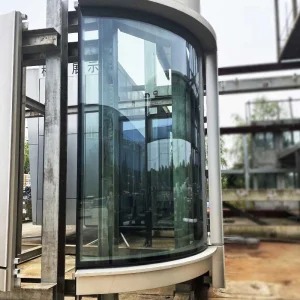
Engineered to minimize thermal transfer, maximize natural light transmission, and reduce operational energy loads.
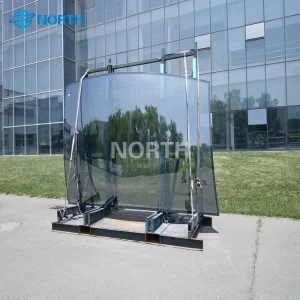
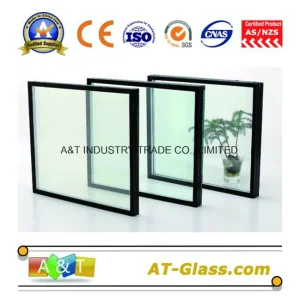
Understanding the critical role of performance-engineered glass in mitigating greenhouse gas emissions and achieving net-zero building operations.
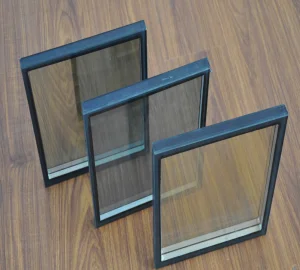
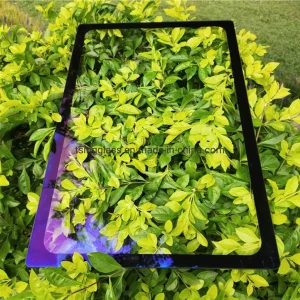
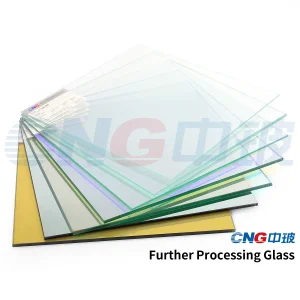
By deploying multi-layered Low-Emissivity (Low-E) coatings and inert gas infills (Argon/Krypton), eco-friendly glass systems drastically reduce thermal transmittance (U-value) while controlling Solar Heat Gain Coefficients (SHGC). This mitigates the urban heat island effect and minimizes HVAC dependency.
Advanced float lines utilizing electric-boosting melting technologies and circular materials significantly lower the embodied carbon footprint of the building envelope. Reintroducing post-consumer cullet optimizes melting points, saving raw resources and energy.
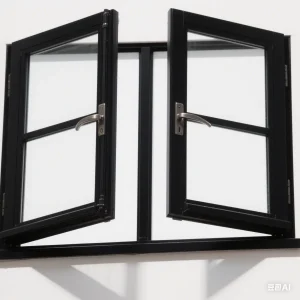
Dynamic double and triple glazing assemblies act as acoustic dampening structures. Laminated glass configurations with specialized PVB or acoustic SGP layers ensure interior comfort, allowing architects to specify glass structures for high-density transport nodes and urban areas.
An overview of energy performance benchmarks, global supply capacity, and standard metrics across North America, Europe, and Asia-Pacific.
| Glazing System Profile | Typical Target U-Value (W/m²·K) | SHGC Range | Primary Industrial Applications | Regulatory Compliance Alignment |
|---|---|---|---|---|
| Double Glazed Soft-Coat Low-E | 1.1 – 1.4 | 0.25 – 0.40 | High-rise curtain walls, office fenestration | LEED v4.1, Energy Star, EN 1279 |
| Triple Glazed Double-Argon Low-E | 0.6 – 0.8 | 0.20 – 0.35 | Passive House buildings, sub-arctic architecture | Passive House Certified, SGCC, CE |
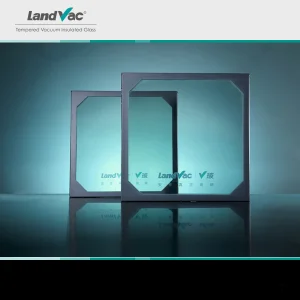
| Tempered Vacuum Insulating Glass (VIG) | 0.4 – 0.5 | 0.30 – 0.45 | Heritage restoration, premium sunrooms, display cases | IGCC, CE, ISO 19916-1 |
| SGP Laminated Anti-Reflective Glazing | 2.8 – 3.2 | 0.60 – 0.75 | Commercial storefronts, museums, safety barriers | ANSI Z97.1, EN 14449, Bulletproof UL 752 |
*Note: Thermal performance values vary depending on pane thickness, spacer material (e.g., warm-edge technology), and localized gas concentrations. Manufacturers must provide third-party certified NFRC/CE reports for project-specific bidding.
Established in 2005, Hebei DotView Glass Co., Ltd. has grown into a leading provider of specialized architectural safety and energy-saving glass solutions. Backed by advanced deep-processing equipment and a rigorous operational management matrix, Hebei DotView focuses on the research, development, and manufacturing of high-performance building and industrial glass.
The company maintains over 50 core technology patents and has successfully completed more than 100 prestigious engineering projects, delivering high-performance glass configurations that enhance structural safety, thermal envelope efficiency, and visual design.
Demonstrated performance across diverse climates, compliance zones, and global urban centers.
DotView has provided energy-efficient glass products and complete enclosure systems for notable landmark developments, including:
Leveraging opportunities under the Belt and Road Initiative, Hebei DotView Glass exports its certified glass solutions globally, supporting developers in:
Corporate Mission: To prioritize employee well-being, foster customer trust, and contribute positively to society.
Business Philosophy: Adhering to principles of integrity and pragmatism, targeting mutual benefits and win-win cooperation to build a prosperous and happy corporate community.
We deliver proactive care, addressing customer needs promptly to build lasting relationships based on trust, loyalty, and mutual respect.
Global certification frameworks and supply chain traceability compliance for green building developments.
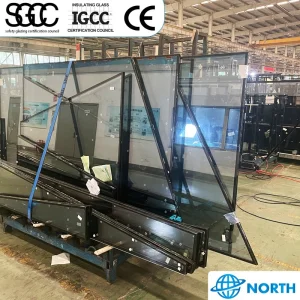
Architectural projects demand compliance with international safety and energy guidelines. Our glass solutions carry CE (Europe), SGCC (North America), and IGCC certifications, ensuring they meet structural load-bearing and thermal envelope specifications.
Integrating high-efficiency double, triple, and vacuum insulating glass configurations directly targets points within Green Building Rating Systems, specifically in categories like Energy & Atmosphere (Optimize Energy Performance) and Materials & Resources (Environmental Product Declarations).
From high-wind zones in coastal Southeast Asia to seismic regions in Central Asia, our technical team provides structural wind load analysis and glass thickness calculations using specialized finite element modeling software.
Tailored structural designs matching distinct regional climates, building typologies, and performance requirements.
Utilizing Tempered Vacuum Insulating Glass, modern sunrooms maintain comfortable interior temperatures in both extreme cold and peak summer heat without relying on continuous heating or cooling, resolving the traditional greenhouse thermal build-up problem.
By pairing Double/Triple Silver Low-E coated glass with structural silicone glazing, commercial tower envelopes allow high levels of natural daylight while rejecting short-wave infrared heat energy, lowering building operating costs.
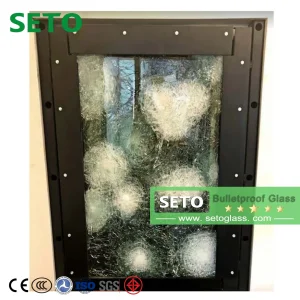
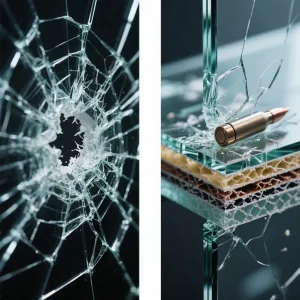
Integrating Bulletproof Laminated Glass and SentryGlas (SGP) interlayers provides safety against impacts, ballistic forces, and high-velocity wind-borne debris, while preserving optical clarity.
Future development pathways for sustainable and smart glazing technologies (2025–2035).
Refining magnetron sputtering processes to apply uniform nanometer-thick metallic layers, achieving lower emissivity with minimal color shifting. Scaling vacuum insulating glass (VIG) production to lower cost-barriers for mainstream residential projects.
Replacing traditional petroleum-derived PVB interlayers with bio-resins and elevating post-industrial/post-consumer cullet rates up to 70% in high-performance float processing lines to reduce initial embodied carbon.
Merging solar harvesting cells directly into facade glazing units. Introducing electrochromic smart glass that automatically tints in response to direct sunlight, eliminating the need for mechanical interior blinds.
Expert answers addressing specification challenges, processing techniques, and thermal calculations.
Soft-Coat Low-E (off-line) involves applying silver and dielectric layers via magnetron sputtering vacuum deposition inside a specialized coater. It offers superior thermal insulation (lower U-value) and optimal SHGC control, but the coating remains sensitive to mechanical damage and oxidation, requiring it to be sealed inside an insulating glass unit (IGU). Hard-Coat Low-E (on-line) is applied pyrolytically during the float glass production phase. It is chemically durable and can be used on single-pane windows, though its thermal performance is generally lower than that of soft-coat alternatives.
Standard IGUs rely on inert gases (Argon/Krypton) to slow conductive and convective heat transfer. However, gas still permits micro-convection currents within the cavity. Vacuum Insulating Glass evacuates the air within the chamber to create a vacuum of approximately 10⁻⁴ Pa, virtually eliminating conductive and convective heat transfer. Conduction is only possible through the microscopic pillar arrays that separate the two glass panes, allowing a VIG unit of 8.3mm thickness to achieve thermal performance equal to or better than a 36mm triple-glazed cavity wall.
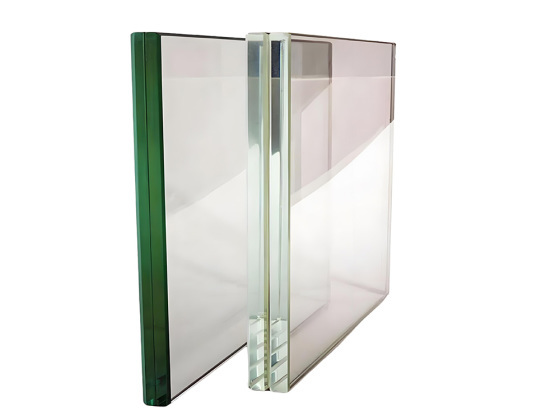
SGP (SentryGlas Plus) is an ionoplast interlayer that is five times stronger and up to one hundred times stiffer than conventional PVB. In structural applications like glass balustrades, overhead glazing, and bulletproof laminates, SGP provides superior load-bearing capacity and edge stability. If the glass breaks, the SGP interlayer maintains the structural envelope's integrity, preventing the glass pane from sagging or falling out of the framing system. SGP also exhibits high moisture resistance, preventing edge delamination over time in humid environments.
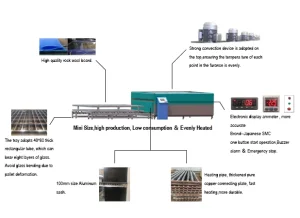
Hebei DotView utilizes high-precision automated cutting, grinding, and tempering systems. Each production batch undergoes strict stress-polarization checks, thermal-shock resistance testing, and gas-fill concentration audits. Our structural glass holds CE and SGCC certifications, ensuring compliance with both European Union and North American structural and safety testing standards.
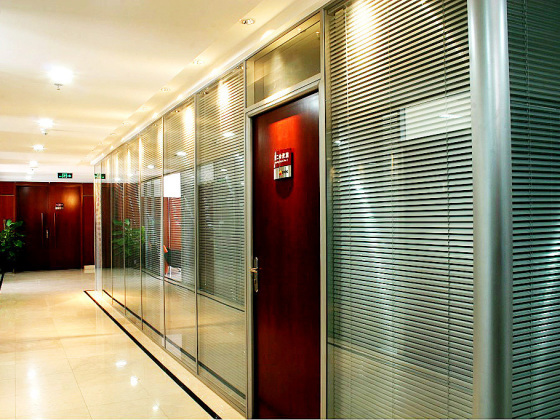
Built-in Venetian blinds hermetically sealed inside double-glazing units eliminate the need for cleaning and maintenance while offering variable light control. They prevent heat transfer by reflecting solar radiation before it enters the interior room space. By sealing the motorized or magnetic control mechanism inside the inert-gas environment, the components are protected from dust, physical wear, and atmospheric oxidation.
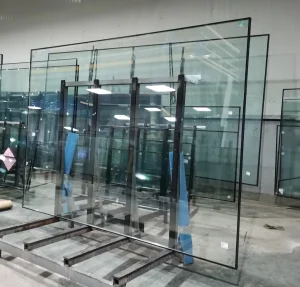
We provide full technical submittals, including wind-load engineering calculations, thermal simulation reports, and performance certifications matching local code authorities (such as building regulations in Southeast Asia, the EU, or Central Asia). Our logistics team coordinates sea and rail transport utilizing custom-engineered steel-frame crates to prevent transit breakage.
Engineered for high-security applications, specialty screens, and custom architectural facades.