Established in 2005, Hebei DotView Glass Co., Ltd. has evolved into a premier global pioneer in the deep-processing glass sector. With deep roots in northern China's industrial glass capital, we possess state-of-the-art automated manufacturing facilities, offering bespoke processing systems engineered for heavy-duty structural applications, severe thermal parameters, and stringent safety thresholds. Our corporate mission is clear: To prioritize employee well-being, foster customer trust, and contribute positively to society. We execute this by maintaining a strict, quality-first business philosophy, promoting mutual growth, and establishing reliable strategic systems with clients worldwide.
Over the past two decades, DotView Glass has built a formidable patent portfolio, holding more than 50 core technology patents in safety glazing chemistry, thermal boundaries, and structural lamination. This R&D edge has enabled us to successfully execute over 100 mega engineering projects. Our dedication to safety and excellence has secured long-term partnerships with leading real estate and construction conglomerates including Longfor Properties, Vanke Properties, Hongkong Land, China Merchants Property, China Overseas Property, CapitalLand, Poly Developments, and Dazheng.
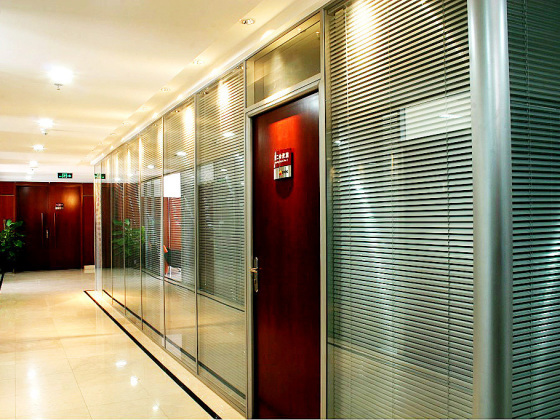
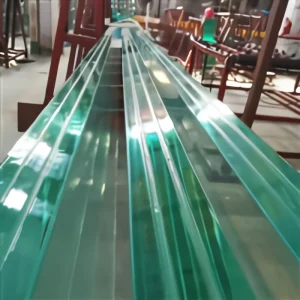
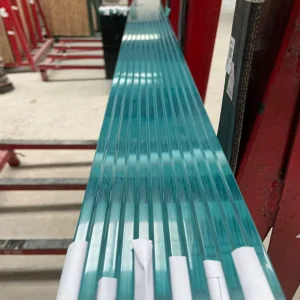
Fire-resistant glass is not a singular material but a highly engineered line of safety products categorised by how they perform when exposed to extreme thermal stress. For facade engineers and building safety inspectors, recognizing the difference between thermal integrity and thermal insulation is vital. Under BS EN 13501-2 and similar global standards, fire-rated glazing is classified into three main classes:
Designed to prevent the passage of flames, smoke, and hot gases for a specified duration (typically 30, 60, 90, or 120 minutes). However, it does not prevent the transmission of radiative heat to the non-fire side. Commonly engineered as monolithic toughened borosilicate glass.
Provides the same flame and smoke barrier as Class E, but adds protective control against radiant heat. It limits heat radiation transfer to less than 15 kW/m² on the unexposed side, protecting escaping occupants and nearby combustible materials.
The highest level of fire barrier performance. It blocks flames, smoke, and heat transmission entirely, keeping the temperature of the non-fire face below 140°C (average rise). Utilizing advanced intumescent gel layers, this glass acts as a solid thermal wall.
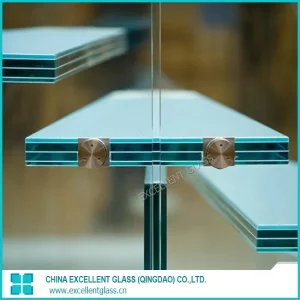
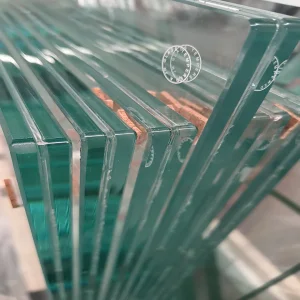
Multi-layer insulated fire glass relies on a chemical reaction. The interlayers consist of an aqueous sodium silicate or nano-silicate polymer gel. In a fire event, as the temperature rises past 120°C, the moisture inside the gel evaporates, causing the layer to expand into a tough, opaque, ceramic-like foam. This foam creates an absolute barrier to thermal energy, completely neutralizing conductive, convective, and radiative heat transfer.
Modern building codes require structural transparency while maintaining high fire safety standards. This requires specific, localized application scenarios where standard glass cannot comply:
Multi-story atriums act as natural chimneys during fires. Specifying Class EI fire-resistant glass allows architects to design light-filled, open-plan spaces while complying with safety compartmentation regulations.
Evacuation zones must remain safe from radiant heat. Class EI-60 and EI-120 rated glazed partitions and doors shield escaping occupants from intense temperatures, preventing flashover risks.
Data centers require server rooms to be isolated. Fire-resistant partitions prevent localized electrical fires from spreading to adjacent rooms, protecting critical digital infrastructure.
In biotech, pharma, and chemical facilities, fire-rated window assemblies divide hazard zones without compromising visual monitoring, ensuring safety and operation continuity.
On offshore drilling rigs and cruise vessels, space is tight, and fires are highly dangerous. Custom-certified fire-resistant glass partitions (A-60 class) isolate machine rooms and living quarters, resisting thermal and physical impact under severe offshore conditions.
As a leading supplier in Northern China, Hebei DotView Glass Co., Ltd. benefits from a highly integrated regional industrial cluster. This localized network ensures reliable supply chains, cost efficiency, and fast delivery for large-scale international projects.
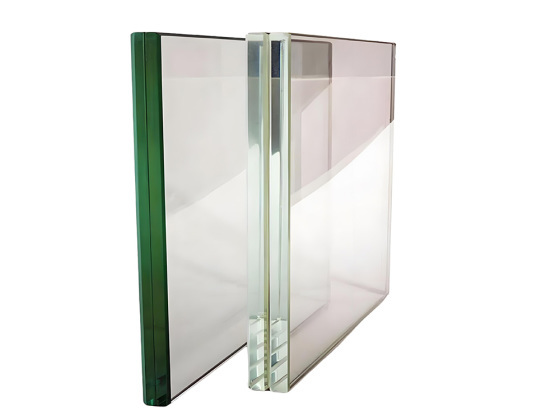
Building safety codes require that fire-rated glazing meets strict certification standards. DotView Glass manufactures and tests its products to satisfy major international standards, facilitating approvals with local building inspectorates:
| Certification System | Primary Regions | Applicable Test Standards | Glazing Focus Area |
|---|---|---|---|
| European Norm (EN) | European Union, Middle East | EN 1363, EN 1364-1, EN 1634-1 | Integrity (E) & Full Insulation (EI) classified by specific minutes (30, 60, 90, 120) |
| British Standard (BS) | Commonwealth, Southeast Asia | BS 476 Part 22 | Determines the fire resistance of non-loadbearing elements of construction |
| North American (UL/ASTM) | United States, Canada | UL 9, UL 10B, UL 10C, ASTM E119 | Hose stream endurance test, testing resilience under high-pressure water impact after fire exposure |
| GB Standard | China | GB 15763.1 | National safety standard for fire resistant safety glass |
Our quality control program requires that every batch of fire-resistant glass undergoes testing, including heat soak testing (HST) to prevent spontaneous breakage from nickel sulfide (NiS) inclusions, optical distortion verification, and gel clarity analysis.
We continuously invest in R&D to improve the thermal and structural performance of our fire-rated glass systems. Our current technology roadmap focuses on several key trends:
Integrating PDLC switchable smart film within fire-rated laminated units. This offers on-demand privacy while maintaining critical fire compartmentation.
Combining advanced low-emissivity (Low-E) coatings with fire-rated glass in double or triple Insulated Glass Units (IGUs). This delivers exceptional U-values and solar heat gain control without reducing fire protection.
Utilizing chemical tempering and high-performance borosilicate compositions to reduce thickness and weight while keeping a 120-minute fire rating. This reduces structural loads on facades.
Hebei DotView Glass Co., Ltd. has delivered energy-efficient glass products and complete enclosure systems for prestigious commercial and public projects, including:
We have supplied high-performance structural glass to premium mixed-use developments, including Longfor Xinyi Street, Longfor Shunshan Mansion, Longfor Chenlinjian, Hongkong Land Yijiang County, Hongkong Land Qiyuan, Chongqing Dianjiang Fortune Center, and Liangjiang Xinghui Longsheng.
Our safety and acoustic glazing systems meet the rigorous demands of institutional facilities, such as Guiyang High-Speed Rail Bus Building, Guizhou Zunyi Medical College, Yunnan Wenyuan Museum, and Chengdu Aerospace City Shangcheng.
Our double-glazed and laminated safety configurations provide critical fire containment for major residential developments, including COLI International Community, COLI Universal Mansion, COLI Ziyu Jiangshan, and the Changjiahui project.
Beyond our strong presence in Northern and Eastern China, DotView Glass has actively leveraged the Belt and Road Initiative to supply certified architectural glass to projects across Southeast Asia, Central Asia, and Eastern Europe, including Thailand, Vietnam, Cambodia, Philippines, Indonesia, Russia, Pakistan, and Kyrgyzstan.
 DotView Glass