Why should I use SGP instead of PVB for glass walkways? The answer begins with post-breakage safety, not marketing claims. A walkway must withstand people, impact, wind, vibration, temperature changes, and occasional glass failure. ASTM E2751, the standard practice for supported glass walkways, emphasizes system behavior, redundancy, and safe performance after breakage. ASTM E1300 also requires engineers to assess laminated-glass load capacity, support conditions, and glass dimensions.
SGP often offers greater stiffness and better edge stability than conventional PVB. Kuraray’s SentryGlas technical reports show that SGP laminates can retain stronger post-breakage behavior, especially in demanding overhead and walking-surface applications. That matters beneath your feet. A cracked panel should remain supported, rather than immediately losing its shape. SGP also tends to resist moisture-related edge damage more effectively. PVB can still be suitable, especially where acoustic control, color, cost, or local availability matters. It is not automatically inferior.
Dr. Jan Wurm, a recognized structural-glass researcher, has offered a useful warning: “Structural glass must be designed as a system, not treated as a finish.” That principle should guide any 2026 SGP versus PVB comparison. My practical concern is simple: SGP may provide a wider safety margin, but poor detailing can defeat it. Drainage, bite depth, fasteners, interlayer compatibility, and maintenance remain critical. No material replaces engineering judgment. For a real project, a qualified structural engineer should verify the complete assembly against applicable regional codes and testing requirements.
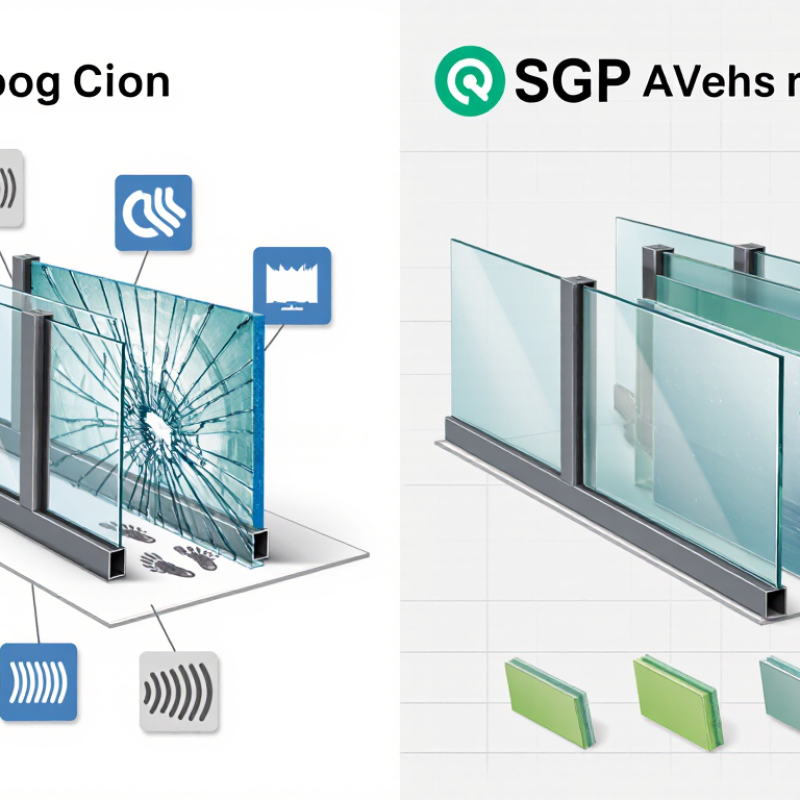
SGP and PVB are interlayers placed between glass plies in laminated glass walkways. They hold broken glass together after impact or damage. The interlayer is not a decorative film. It is part of the walkway’s safety system.
PVB is flexible and widely used for its acoustic performance, UV filtering, and practical cost. However, moisture can affect exposed edges if fabrication or sealing is poor.
SGP is stiffer, so it usually provides better glass alignment, edge stability, and post-breakage support. This matters when people walk above open spaces. The floor may feel firmer, with less visible deflection under load.
Still, SGP is not automatically the better choice. That assumption can fail. The result depends on glass thickness, span, support details, temperature, impact risks, and drainage. A poorly designed SGP walkway remains unsafe. A carefully engineered PVB system may perform well in a protected interior setting.
During project reviews, I look closely at exposed edges, clamping details, and water paths. Small defects can become serious over time. Designers should request structural calculations, interlayer data, and tested post-breakage performance. Local building requirements also matter. One detail is often underestimated: installation quality. Dust, uneven supports, or trapped moisture can weaken confidence in an otherwise sound design.
For glass walkways, strength and stiffness are not interchangeable. SGP interlayers are commonly reported as up to 100 times stiffer than standard PVB at room temperature, according to the National Glass Association’s Laminated Glazing Reference Manual. This higher stiffness limits deflection under walking loads and helps maintain a flatter surface between supports.
PVB still provides valuable safety performance. When laminated glass breaks, its flexible interlayer can retain shards and reduce immediate fallout. However, moisture, edge exposure, and temperature can affect long-term performance. The same NGA guidance notes that ionoplast interlayers generally offer higher tear strength and better resistance to humidity than conventional PVB. That matters near wet cleaning zones or partially exposed edges.
A walkway needs more than strong glass. ASTM E2751 and ASTM E1300 require engineers to consider load, span, support conditions, glass thickness, and post-breakage behavior. SGP often gives designers more residual capacity after cracking, but it does not remove the need for laminated construction and proper edge protection. PVB may still suit sheltered interiors where deflection limits are modest and detailing is well controlled. I would not select either interlayer by habit. Site temperature, drainage, foot traffic, and maintenance quality can change the safer choice.
Stiffness helps. It is not safety by itself.
Walkway interlayers face repeated footsteps, impact, moisture, and temperature changes. SGP usually provides higher stiffness and stronger post-breakage support. That stiffness can reduce deflection beneath a person’s feet. It may also help keep fractured glass aligned after damage. PVB usually offers better sound damping and a softer visual appearance. Neither option wins in every walkway design.
On a busy bridge, a rigid interlayer can make the floor feel more stable. However, the surrounding glass, framing, fasteners, and edge support remain equally important. Poor drainage can expose the interlayer to moisture at exposed edges. That detail is often underestimated. Temperature movement also matters, especially where glass connects to steel or concrete. Small installation errors can create larger service problems later.
Engineers should compare load duration, span length, support conditions, slip resistance, humidity, and maintenance access. A qualified specialist should verify the full glass build-up against local structural requirements. Acoustic performance may guide selection in indoor walkways, hotels, or transport buildings. High-traffic outdoor routes may place greater value on stiffness and edge protection. The practical choice can change with climate and cleaning methods. Even experienced teams should review mock-up results, because laboratory behavior may not match a real walkway.
2026 Top SGP vs PVB for Glass Walkways: Which Is Better?
Cost, installation, and maintenance often decide more than laboratory strength. PVB usually has the lower material price and wider fabrication availability. SGP-type interlayers generally cost more, but they provide higher stiffness and better edge stability. A 2024 technical review from the National Glass Association notes that interlayer selection must consider span, support, impact, climate, and local code requirements. A cheaper panel can become expensive after redesign.
Installation requires careful handling. Glass walkways need accurate supports, controlled tolerances, drainage, and protection from construction damage. The U.S. Bureau of Labor Statistics reported a median annual wage of about $49,000 for glaziers in May 2023, before benefits and project overhead. Labor can therefore outweigh the interlayer price difference. Stiffer laminates may reduce visible deflection, but they do not remove the need for structural calculations or specialist lifting equipment.
Maintenance is less dramatic, but more revealing. PVB edges need reliable sealing because moisture can cause haze or delamination. SGP-type laminates usually resist edge movement and may retain better clarity in demanding conditions. However, neither option is maintenance-free. The 2023 National Glass Association Glass and Glazing Manual emphasizes regular inspection of seals, drainage paths, supports, and glass damage. In practice, cleaning chemicals and trapped water often create bigger problems than foot traffic. The uncertain part is lifecycle cost: site exposure and detailing can change the answer completely.
Choosing SGP or PVB for a glass walkway requires more than comparing stiffness. The walkway’s span, support layout, foot traffic, and expected loads should guide the decision. SGP usually provides higher rigidity and stronger post-breakage performance. This can reduce visible deflection across longer spans. PVB may offer better vibration damping and sound reduction, which matters near offices, hotels, or residential spaces. It can also suit projects where acoustic comfort matters more than maximum stiffness.
Site conditions deserve equal attention. Measure the walking surface, drainage paths, edge restraints, and temperature range before selecting the interlayer. Water trapped near the edges can create long-term problems. Direct sunlight may also affect interlayer performance, depending on the glass system and exposure. Ask the engineer to review slip resistance, impact loading, cleaning equipment, and replacement access. A beautiful panel is not enough.
The complete assembly matters most. Glass thickness, heat treatment, support spacing, fasteners, and interlayer compatibility must be tested together. In project reviews, I have seen teams focus on the interlayer while overlooking a weak edge detail. That mistake can control the real risk. SGP may be preferable for a stiff, highly transparent walkway with demanding structural requirements. PVB may be reasonable where acoustic comfort, damping, or a specific tested assembly is more important. The final choice should follow calculations, independent testing, and local building requirements, not a simple material preference. Recheck the decision if the design changes.
SGP generally provides higher stiffness, stronger post-breakage performance, and better resistance to edge-related moisture effects, making it well suited to long-span or highly exposed glass walkways. PVB usually offers better acoustic damping and can be more economical. The scores are comparative engineering ratings on a 1–5 scale; final selection should also consider span, support conditions, temperature, humidity, slip resistance, local codes, and required safety testing.
Stiffness limits bending under walking loads. A flatter surface can feel more stable between supports. Strength alone is not enough.
SGP usually provides greater residual capacity after cracking. It can help limit movement in damaged laminated glass. PVB can retain broken shards and reduce immediate fallout.
PVB may suit sheltered interiors with modest deflection limits. It can also improve vibration damping and sound reduction. That may help near offices or hotels.
Moisture may enter through poorly sealed edges. Haze or delamination can develop over time. Trapped water is a quiet problem.
No interlayer guarantees safety by itself. Edge protection, glass thickness, supports, drainage, and post-breakage design still matter. I would not choose by habit.
PVB commonly has a lower material price and broader fabrication availability. SGP-type interlayers often cost more. Redesign costs can erase that difference.
Supports need accurate positioning and controlled tolerances. Installers also need suitable lifting equipment and construction protection. A stiff laminate still needs careful installation.
Inspect seals, drainage paths, supports, and glass damage regularly. Remove trapped water and harsh cleaning residues. Neither system is maintenance-free.
Review span, support spacing, foot traffic, impact loads, sunlight, temperature, and cleaning methods. Replacement access also matters. The real answer may change after site review.
SGP and PVB are interlayers placed between glass panels to improve safety in glass walkways. PVB offers reliable bonding, sound reduction, UV filtering, and a generally lower initial cost. SGP, however, provides greater stiffness, stronger post-breakage support, and better resistance to edge exposure, moisture, and long-term environmental stress. These properties can help reduce glass deflection, improve walking comfort, and maintain a more stable appearance in demanding walkway designs.
Why should I use SGP instead of PVB for glass walkways? SGP may be the better choice when the walkway requires high rigidity, larger panel sizes, minimal movement, or enhanced redundancy after glass damage. PVB can remain suitable for sheltered, smaller, or budget-conscious projects when its performance meets the design requirements. The final decision should consider span, loads, support conditions, climate, slip-resistant surface treatments, fabrication capabilities, installation quality, inspection access, and lifetime maintenance. A qualified structural professional should verify the complete laminated-glass system before construction.

DotView Glass