When it comes to choosing the right glass for fire safety, understanding the difference between fire-resistant glass and heat-strengthened glass is crucial. Homeowners and builders often face a challenging question: How to tell if glass is truly fire-resistant or just heat-strengthened? Both types of glass serve specific purposes, but their properties and applications differ significantly.
Fire-resistant glass is designed to withstand extreme temperatures and prevent flames from spreading. Its certification often comes from rigorous testing standards. Heat-strengthened glass, on the other hand, undergoes a heating process to enhance its strength but doesn't offer the same level of protection against fire. This distinction is vital for ensuring safety in structures like commercial buildings or homes near fire hazards.
Choosing the wrong type could have serious consequences. It's not just about aesthetics or price. Understanding the types and features can save lives and property. Relying solely on the term or labels can be misleading. Therefore, it's important to investigate and verify product claims before making a decision. Achieving a comprehensive understanding will lead to better choices and greater safety.
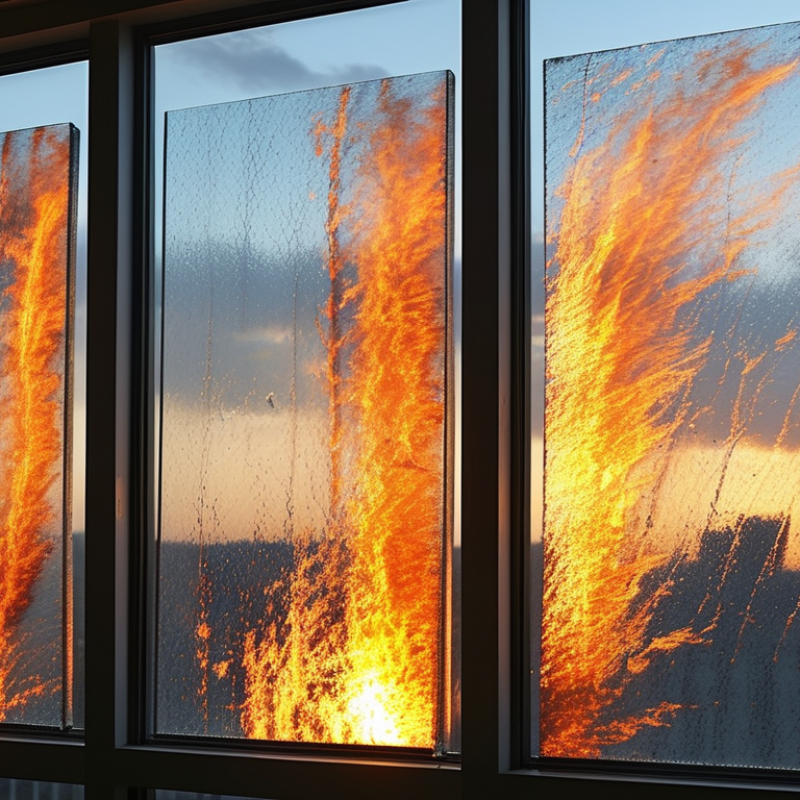
Fire-resistant glass is designed to withstand high temperatures and prevent the spread of flames. This type of glass often includes multiple layers of materials. When exposed to fire, these materials form an insulating barrier. According to the National Fire Protection Association, fire-resistant glass can provide up to four hours of protection under specific conditions.
Heat-strengthened glass, while more robust than ordinary glass, lacks the same fire-resistant properties. It withstands thermal shock better than standard glass but is not intended for fire protection. A report from the Glass Association reveals that heat-strengthened glass can endure temperature variations and is frequently used in commercial buildings.
Tips: When choosing glass for safety, consider your specific needs. Assess local fire codes for compliance. Understand that fire-resistant glass is not completely fireproof. It may need replacing after exposure to extreme heat. Regular inspections are crucial for ensuring ongoing safety and compliance.
Heat strengthened glass is often confused with fire resistant glass, but they serve different purposes. Understanding these characteristics is crucial. Heat strengthened glass undergoes a special thermal treatment. This process increases its strength compared to regular glass. It is engineered to handle high temperatures, thus reducing the risk of breakage. However, it is not fireproof and cannot withstand flames.
Tips for choosing the right glass are helpful. Assess your environment carefully. If heat is an issue but direct flames are not, heat strengthened glass may work well. Look for signs of stress or distortion in the glass. These can indicate weaknesses. For installations near potential fire hazards, consider certified fire resistant glass.
Beyond the strengths, remember that heat strengthened glass can still break. It’s essential to reflect on its limitations. Always have professional assessments for installations in safety-critical areas. Regular checks can prevent potential hazards. Understanding these details fosters informed decisions regarding glass safety.
When discerning between fire-resistant glass and heat-strengthened glass, it's crucial to understand their unique properties. Fire-resistant glass is designed to withstand high temperatures and prevent the spread of flames and smoke. Its critical role is to protect lives and property during a fire. It often contains special materials that reflect heat and enhance evacuation safety.
In contrast, heat-strengthened glass has improved thermal resistance but does not offer the same level of fire protection. It is treated through a heating process that increases its strength against thermal stress. This type of glass can be used in situations involving temperature fluctuations, such as in facades or skylights, but it may break under extreme conditions.
While both types serve important functions, the choice depends on specific needs. A misunderstanding might arise in assuming that heat-strengthened glass can act as a fire barrier. This misconception can lead to unsafe building practices.Choosing the right glass can seem complex, yet it is crucial for safety and compliance with building codes. Always consult with a specialist when making decisions in architectural design.
Fire resistant glass plays a critical role in ensuring building safety. It is used in locations such as stairwells, fire-rated doors, and windows. According to a study by the Fire Protection Research Foundation, fire resistant glass can withstand high temperatures for extended periods. This feature saves lives during emergencies by delaying the spread of flames and smoke.
In contrast, heat strengthened glass offers different benefits. It is more resistant to thermal shock compared to regular glass. However, it does not provide the same level of fire protection as fire resistant options. For example, it might handle the heat of a fireplace but can fail under direct fire exposure. Understanding these differences is essential for architects and builders.
Decision-makers should consider specific project needs carefully. Fire resistant glass may be necessary in commercial buildings where strict fire codes apply. Yet, heat strengthened glass might be a cost-effective choice for less critical applications. Reflecting on the available options is vital in ensuring safety and compliance without overspending.
When it comes to glass used in construction, understanding its heat and fire resistance is crucial. The testing standards for glass resistance provide valuable insights. Fire resistant glass must meet specific criteria, often defined by ASTM E119 or EN 13501-2. These standards ensure that the glass can withstand high temperatures and prevent the spread of flames.
Heat strengthened glass, on the other hand, offers improved durability. It undergoes a process that increases its strength against thermal stress, but it does not offer the same fire resistance. According to research by the National Glass Association, heat strengthened glass can withstand temperatures up to 400°F. In contrast, fire resistant glass can endure much higher temperatures, maintaining integrity under extreme conditions.
While the differences seem clear, confusion often arises in practical applications. Not all fire resistant glass is suitable for every situation. Some glass types may have inconsistent performance in real-world scenarios. Addressing this confusion requires careful consideration and expert analysis. This shows the importance of conducting thorough evaluations when selecting glass for safety and compliance in building projects.
: Fire-resistant glass is designed to resist high temperatures and stop flames from spreading. It includes multiple layers of materials.
When exposed to fire, the materials form an insulating barrier, protecting against flames. It can provide up to four hours of protection.
No, heat-strengthened glass is not fireproof. It can handle thermal shock but cannot withstand direct flames.
It is used in stairwells, fire-rated doors, and windows, helping to delay flame and smoke spread during emergencies.
Assess your specific needs and local fire codes. Understand that fire-resistant glass may require replacement after extreme heat exposure.
If heat is a concern but flames are not, heat-strengthened glass might suffice. Check for stress signs or distortions for weaknesses.
It can still break under pressure and should be professionally assessed for safety-critical installations.
Regular checks can prevent potential hazards by identifying weaknesses or damage to the glass before issues arise.
No, they serve different purposes. Fire-resistant glass provides fire protection, while heat-strengthened glass is stronger but not fire-resistant.
It may need replacing after exposure, as it is not totally fireproof despite providing significant protection for a time.
The article "How to Identify Fire Resistant Glass vs Heat Strengthened" delves into the essential characteristics and differences between fire-resistant glass and heat-strengthened glass. Fire-resistant glass is designed to withstand high temperatures and resist fire for specific durations, making it crucial in safety applications such as buildings and fire-rated doors. In contrast, heat-strengthened glass, while more robust than standard glass, does not provide the same level of fire protection. To discern between the two types, understanding key differences, including their applications and testing standards, becomes imperative.
Readers often wonder, "How to tell if glass is truly fire-resistant or just heat-strengthened?" This article addresses those inquiries by outlining the characteristics and performance metrics that distinguish these two categories of glass. Through this understanding, users can make informed decisions about the appropriate glass type based on safety needs and regulatory requirements.

DotView Glass