Cutting tempered glass after heat treatment seems practical when a window opening changes or a damaged edge needs trimming. It is not. Is it possible to cut tempered glass after it has been heat-treated? In normal fabrication, no. Tempering creates balanced internal stresses across the pane. A saw, drill, or even a sharp edge impact can release those stresses suddenly. The glass may break into many small fragments rather than produce a clean cut.
The technical reason is measurable. ASTM C1048 specifies a minimum surface compression of approximately 69 MPa for fully tempered glass. This compression improves strength and thermal-shock resistance, but it also removes conventional cutting flexibility. The National Glass Association’s technical guidance describes tempered glass as safety glazing that must be fabricated before tempering. Industry processors therefore cut, edge, drill, and polish each piece first. Then, and only then, does it enter the tempering furnace. Small details matter. A 6-millimeter pane may look perfect on a worktable, yet one tiny edge chip can trigger complete fragmentation.
There are limited exceptions, but they are not ordinary workshop solutions. Specialized laser or controlled-ablation systems may modify certain glass products, but they require qualified equipment, testing, and manufacturer approval. Even then, results can vary. That point deserves more honesty. “Can it be done?” is different from “Can it be done safely and reliably?” For most building, furniture, and automotive applications, the dependable answer is to order a new pane made to the final dimensions. Measure twice. Temper once.
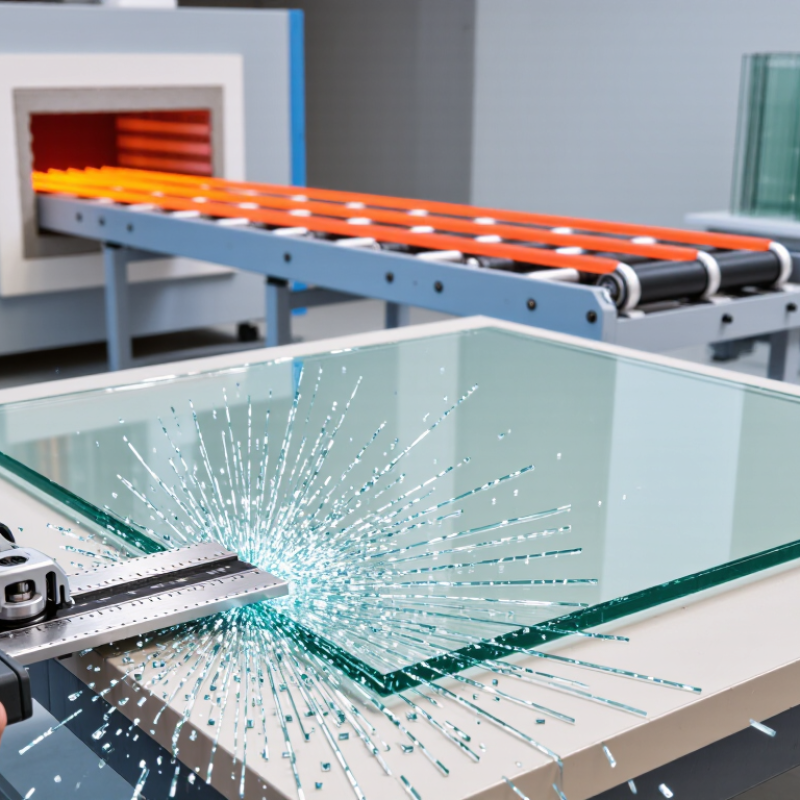
Tempered glass is cut, drilled, and shaped before heat treatment. The heating and rapid cooling process creates strong internal tension. This tension improves impact resistance, but it also changes how the glass breaks. A cutting wheel does not make a controlled line. It can release the stored stress across the entire pane.
The result may be sudden shattering. It often breaks into many small pieces, sometimes with a sharp cracking sound and little warning. Even a minor edge chip can trigger failure later. This makes cutting tempered glass unsafe for workers and difficult to control in a workshop. Protective equipment helps, but it cannot prevent the glass from collapsing unexpectedly. Do not try it casually.
A qualified glazier normally confirms measurements before tempering begins. Openings for handles, hinges, vents, and fittings must also be prepared earlier. Technical guidance should be checked before production, especially for thick or unusually shaped panels. Some people assume a diamond blade can solve the problem. It cannot remove the internal stress. That assumption sounds practical, but it misses the material’s basic behavior.
If a finished panel is the wrong size, replacement is usually more reliable than modification. In some applications, another glass construction may suit the design better. The choice depends on safety requirements, dimensions, edge conditions, and installation details. A small measurement mistake can become an expensive failure.
Tempered glass is not simply stronger annealed glass. It is annealed glass that has been heated and rapidly cooled, creating compression on its surfaces. This treatment improves impact resistance and thermal strength. It also changes how the glass breaks. Tempered glass usually falls into small, blunt fragments. Annealed glass can form long, sharp shards.
The difference matters during fabrication. Annealed glass can be cut, drilled, or shaped with suitable tools and controlled technique. Tempered glass cannot be cut safely after heat treatment. Even a small cut, hole, or edge grind may release internal stress and cause the entire pane to shatter. It may fail suddenly. That is the difficult part.
In practical production, workers cut and finish tempered panels before heating them. Dimensions, holes, notches, and polished edges must be confirmed early. A measuring error cannot usually be corrected afterward. I have found that even minor edge damage deserves attention, because a tiny chip can become a failure point during handling or temperature changes. Still, “stronger” does not mean indestructible. Tempered glass may resist a hard impact better than annealed glass, yet its treated edges remain sensitive. Professional fabricators inspect the surface, edges, and intended use before selecting the glass type.
Can You Cut Tempered Glass After Heat Treatment?
Safe Alternatives to Cutting Tempered Glass
Tempered glass should not be cut after heat treatment. A saw, drill, or even a small edge chip can release internal stress suddenly. The panel may break into many small pieces without warning. ASTM C1048 sets a minimum modulus of rupture of 69 MPa for fully tempered glass. That strength comes from compression at the surface, not from extra thickness.
Plan the dimensions before tempering. A professional fabricator can cut, polish, drill, and notch annealed glass first. The finished piece can then receive heat treatment. This approach suits shower panels, doors, partitions, and table tops. The Glass Association of North America also advises completing fabrication before tempering. Small mistakes become expensive later.
Need a different size?
Replace the panel.
For an existing installation, order a new tempered panel from measured drawings or a verified template. Do not attempt field cutting. A laminated glass design may offer another option when retention after breakage matters, but it still requires factory processing. Edge finishing also needs attention; rough edges can create failure points during transport or installation. I have seen “minor” adjustments become full replacements. That risk is easy to underestimate, especially when the glass appears flawless. A final measurement check is cheaper than testing the panel with a drill.
Can You Cut Tempered Glass After Heat Treatment?
Tempered glass should not be cut after heat treatment. Cutting, drilling, or grinding it afterward can release internal stress and cause sudden shattering. The safer process is to order custom-cut tempered glass before tempering. The fabricator cuts the panel, shapes the edges, and drills required holes first. Heat treatment then strengthens the finished piece.
Accurate planning matters. Provide exact width, height, thickness, edge finish, hole diameter, and hole locations. Allow space for frames, seals, and thermal movement. A few millimeters can affect installation. In practice, the best results come from clear drawings and a second measurement at the job site. I have seen projects delayed because a hinge hole was placed too close to an edge. It looked acceptable on paper, but the final fit failed. That mistake is worth remembering.
Tips: Measure the opening at several points. Use the smallest confirmed dimension when necessary. Mark which side faces outward. Check every hole against the hardware template. Ask the fabricator about tolerances before approval. Do not assume a last-minute adjustment is possible after tempering. If the design may change, pause before heat treatment. A plain glass sample can help verify size and alignment, though it will not reproduce every installation condition. Keep the approved drawing with the delivery paperwork.
No. Cutting can release internal stress and shatter the entire pane without warning.
Heating and rapid cooling create strong internal tension. A cutting wheel may release that tension across the pane.
No. A diamond blade cannot remove the glass’s internal stress. The pane may still collapse suddenly.
Holes, notches, vents, and fittings should be prepared before heat treatment. Measure them carefully.
Replacement is usually safer than modification. A small size error can become an expensive installation failure.
Tempered glass resists impacts and heat better. Annealed glass is easier to cut, but it can form long, sharp shards.
Yes. A tiny chip may become a failure point during handling or temperature changes. Edge damage deserves attention.
Protective equipment reduces injury risk, but it cannot prevent unexpected shattering. Do not try it casually.
Confirm measurements, openings, edge finishes, thickness, and installation conditions. I may underestimate small details sometimes.
No. It handles impacts better, but its treated edges remain sensitive. “Stronger” does not mean indestructible.
Tempered glass undergoes controlled heating and rapid cooling that strengthens its surface and creates internal tension. This process improves impact resistance, but it also makes the glass fundamentally different from annealed glass. Is it possible to cut tempered glass after it has been heat-treated? In practice, cutting, drilling, or reshaping it afterward is unsafe and impractical because the stored stress can cause the entire pane to shatter suddenly into small pieces. Even minor attempts to modify the glass may lead to unexpected breakage, injury, and material loss.
Unlike annealed glass, which can usually be cut and then processed, tempered glass must be accurately measured and shaped before heat treatment. Safer alternatives include ordering a new piece made to the required dimensions, selecting annealed or laminated glass when later cutting is necessary, or consulting a qualified glass professional about suitable options. For projects involving openings, curves, or hardware holes, custom-cut tempered glass should be ordered in advance so that all specifications are completed before strengthening.

DotView Glass