What causes delamination in laminated glass over time? The answer usually begins at the interlayer edge. Moisture, heat, ultraviolet exposure, poor edge sealing, and incompatible sealants can slowly weaken the bond between glass and interlayer. A cloudy border may appear first. Later, bubbles, white marks, or visible separation can spread inward.
The National Glass Association’s Laminated Glazing Reference Manual explains that laminated-glass durability depends heavily on processing quality, edge protection, and environmental exposure. ASTM C1172 also emphasizes controlled manufacturing and consistent interlayer adhesion. European standard EN 14449 addresses conformity requirements, but it does not promise unlimited service life. That distinction matters.
Dr. Richard A. Behr, a recognized architectural-glass researcher, has often emphasized this practical principle: “Glass performance depends on the whole system, not glass alone.” The wording is simple. The lesson is not.
Temperature cycling can force small movements between materials with different expansion rates. Trapped moisture may then travel through microscopic edge defects. Manufacturing records, installation conditions, sealant compatibility, and building orientation should all be reviewed before blaming the interlayer.
There is no universal delamination timetable.
Some units remain clear for decades. Others show early failure near unprotected edges, especially in hot, humid climates. Industry testing can reveal tendencies, but field performance remains variable. This is where many explanations become too confident. A reliable assessment needs photographs, service history, climate exposure, glass composition, and laboratory inspection. The following outline examines these causes, warning signs, and prevention strategies in practical detail.
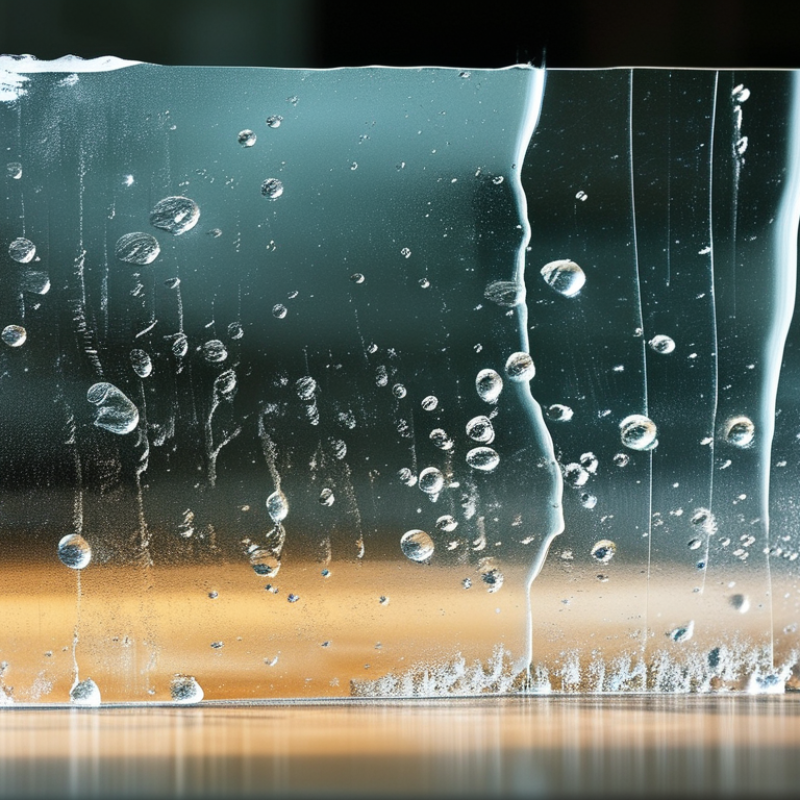
Delamination is the partial separation of the glass from its plastic interlayer. The interlayer normally keeps broken glass attached and maintains visual clarity. Over time, the bond can weaken at the edges or within the glass area. Moisture, heat, ultraviolet exposure, contamination, and manufacturing stress may contribute to this failure.
The appearance often begins as a thin white line near the perimeter. Small bubbles may follow. Some panels show cloudy patches, milky streaks, or a silver-like haze between glass layers. In advanced cases, the edge looks lifted, swollen, or visibly uneven. The defect may expand inward from corners and exposed edges. It can also appear around holes, cutouts, or damaged seals.
Look closely under angled daylight. A flashlight placed beside the glass can reveal faint air pockets and irregular boundaries. Do not confuse delamination with surface scratches, condensation, or dirt. Those marks usually change when the surface is cleaned or viewed from another angle. Delamination remains inside the laminate. That distinction is easy to miss. A common inspection mistake is judging only the center of the panel. Edge damage often develops first. The condition may not indicate immediate collapse, but it can reduce transparency and allow further moisture entry. Records should include photographs, location, approximate size, and changes over time. Even careful assessments have limits, especially when the defect is small or hidden by framing.
| Cause or Contributing Factor | How It Leads to Delamination | Typical Visual Appearance | Common Location | Typical Time Pattern | Relative Risk | Recommended Inspection or Control |
|---|---|---|---|---|---|---|
| Moisture Ingress at the Edges | Water vapor or liquid water can enter through exposed, damaged, or inadequately protected edges. Moisture reduces adhesion between the glass and interlayer and may promote whitening or separation. | White, cloudy, or silver-colored areas that begin at the edge and gradually extend inward; small bubbles may also appear. | Perimeter of the laminated pane, especially near exposed edges, holes, cut-outs, and corners. | Usually develops gradually after repeated exposure to humidity, rain, condensation, or wet cleaning conditions. | High | Inspect edge protection, glazing drainage, seal continuity, and signs of standing water. Keep laminated edges dry and protected where required. |
| Failure or Incompatibility of Edge Sealants | A degraded or chemically incompatible sealant can lose adhesion, allow moisture migration, or transfer substances that interfere with the interlayer. | Localized edge haze, bubbles, darkened margins, or a narrow separation line following the sealant. | Along framing interfaces, pressure plates, sealant joints, and perimeter seals. | May appear after years of weathering, thermal cycling, or contact with incompatible materials. | High | Confirm sealant compatibility with the interlayer and adjacent materials. Check for cracking, shrinkage, debonding, and loss of elasticity. |
| Ultraviolet Radiation | Long-term UV exposure can age certain interlayers and sealants, particularly where the glazing system does not provide adequate UV protection. | Yellowing, haze, loss of transparency, bubbles, or progressive separation in exposed areas. | Areas receiving strong sunlight, especially near unprotected edges or locations with direct UV exposure. | Typically gradual and cumulative; the rate depends on interlayer type, glazing design, and exposure level. | Medium | Use an interlayer suitable for the expected UV environment and maintain effective edge protection and system sealing. |
| Excessive Heat and Thermal Cycling | Repeated heating and cooling causes differential expansion and contraction between glass, interlayer, frames, and sealants. Stress can weaken the interface over time. | Bubbles, localized haze, edge separation, or irregular cloudy zones; defects may be more visible when the glass is hot. | Near edges, dark-colored framing, partially shaded areas, and locations with strong solar exposure. | Often develops progressively after repeated daily or seasonal temperature changes. | Medium | Assess thermal stress, shading patterns, ventilation, framing clearances, and compatibility of the complete glazing assembly. |
| Manufacturing or Lamination Defects | Insufficient heat, pressure, cleaning, drying, or bonding during production can leave weak adhesion, trapped air, contaminants, or residual moisture. | Small bubbles, inclusions, streaks, cloudy patches, or separation that may be visible from the beginning or expand with time. | Anywhere within the laminate; edges and isolated internal areas are common starting points. | May be present at installation and become more noticeable under heat, humidity, and mechanical stress. | High | Record the defect location and size, compare with installation records, and arrange professional assessment before replacement or repair decisions. |
| Contamination Between Glass and Interlayer | Dust, oil, cleaning residues, moisture, or other foreign substances can prevent uniform adhesion during lamination. | Irregular cloudy spots, circular bubbles, streaks, or sharply defined areas of poor contact. | Localized regions within the laminate, often near handling marks or areas with unusual patterns. | May be immediately visible or become more pronounced as the laminate experiences heat and moisture. | High | Use clean, dry materials and controlled production conditions. Document any pre-existing inclusions or bonding irregularities. |
| Mechanical Damage and Edge Chipping | Impact, abrasion, poor handling, or chips at the glass edge can break the protective boundary and create a pathway for moisture and stress concentration. | Delamination radiating from a chip, scratch, impact point, hole, or damaged corner; edge whitening may surround the damaged area. | Corners, cut-outs, drilled holes, edges, and areas exposed to impact or abrasion. | Can occur suddenly after damage or progress slowly as moisture enters the affected area. | High | Inspect edges before installation and after impact events. Protect exposed edges and replace severely damaged panes when structural or safety performance is affected. |
| Incompatible Cleaning or Maintenance Chemicals | Some chemicals can attack sealants, coatings, or interlayer-adjacent materials, weakening edge protection and increasing moisture access. | Edge haze, discoloration, softening or cracking of sealants, and localized bubbles near frequently cleaned areas. | Perimeter joints, corners, and surfaces repeatedly exposed to aggressive cleaners or solvents. | Usually gradual and associated with repeated chemical exposure or improper maintenance practices. | Medium | Follow the glazing system’s cleaning guidance. Avoid abrasive tools and unapproved solvents, and prevent liquid from pooling at the edges. |
| Improper Storage, Transport, or Installation | Wet storage, prolonged contact with standing water, excessive flexing, incorrect setting blocks, or frame pressure can introduce stress and moisture pathways. | Localized bubbles, edge whitening, stress-related separation, or patterns corresponding to support points and frame contact. | Edges, support points, corners, and areas in contact with frames or setting materials. | May appear soon after installation or become visible after environmental cycling. | Medium | Store panes vertically in dry conditions, use suitable setting materials, maintain designed clearances, and avoid forcing glass into the frame. |
| Definition of Delamination | Delamination is the partial or complete loss of adhesion between the glass and the polymer interlayer, or between layers within a laminated glass construction. | Common signs include bubbles, blisters, cloudy or milky zones, white edge marks, haze, and visible separation lines. | It may be limited to the perimeter or occur in isolated or widespread areas across the pane. | The condition can be immediate due to production defects or progressive due to moisture, UV exposure, heat, chemicals, or damage. | High | Measure the affected area, photograph it under consistent lighting, monitor changes, and obtain a qualified glazing assessment for safety-critical applications. |
: Delamination is the partial separation between the glass and its plastic interlayer. The layers no longer bond evenly. The glass may remain unbroken, but its internal structure weakens.
It often begins as a thin white line near an edge or corner. Small bubbles, cloudy patches, milky streaks, or silver-like haze may appear. Advanced damage can make the edge look swollen or uneven.
Edges, corners, holes, and cutouts are common starting points. Exposed edges can admit moisture through tiny chips or weak seals. Blocked drainage may make the problem worse. The center can look normal.
Moisture, heat, sunlight, contamination, and manufacturing stress can weaken the bond. Dust, oil, or salts may remain between the layers. Uneven processing can trap small air pockets. Usually, several small weaknesses combine.
View the panel under angled daylight. Place a flashlight beside the glass, not directly in front. Look for air pockets and irregular internal boundaries. Check the edges carefully. That matters.
Dirt usually disappears after cleaning. Condensation may change with temperature or ventilation. Scratches remain on the surface and may feel rough. Delamination stays inside the glass and keeps its shape.
Not always. The panel may remain intact for some time. However, reduced clarity and continued moisture entry can worsen the damage. A visibly lifted edge deserves prompt professional assessment. Visual judgment has limits.
Record photographs, the affected location, and the approximate damaged size. Note nearby corners, seals, holes, frames, and drainage paths. Record changes over time. Glass type, interlayer type, production date, and storage conditions may also help. Responsibility is not always obvious.
Delamination in laminated glass is the gradual separation between the glass layers and the plastic interlayer, often appearing as cloudy areas, bubbles, milky edges, or visible whitish patches. Laminated glass typically consists of two or more glass sheets bonded with an interlayer that provides safety, sound reduction, and protection against shattering. Over time, weak adhesion, moisture penetration, heat, ultraviolet exposure, and repeated temperature changes can cause the bond to deteriorate. What causes delamination in laminated glass over time? The main reasons include insufficient cleaning or preparation during production, trapped moisture or air, uneven pressure and temperature during lamination, damaged edges, and long-term exposure to harsh environmental conditions.
Early assessment should include visual inspection, edge examination, and checks for changes in clarity, bubbles, or localized separation. Preventive measures include using compatible, high-quality materials, maintaining strict manufacturing controls, protecting exposed edges, sealing vulnerable areas, and installing the glass according to suitable handling and storage practices. Regular inspections can identify early defects and help extend the service life, appearance, and performance of laminated glass.

 DotView Glass